Unknown
Rare Rationalist 6-Light Chandelier with Bauhaus Influence, Italy, 1930s
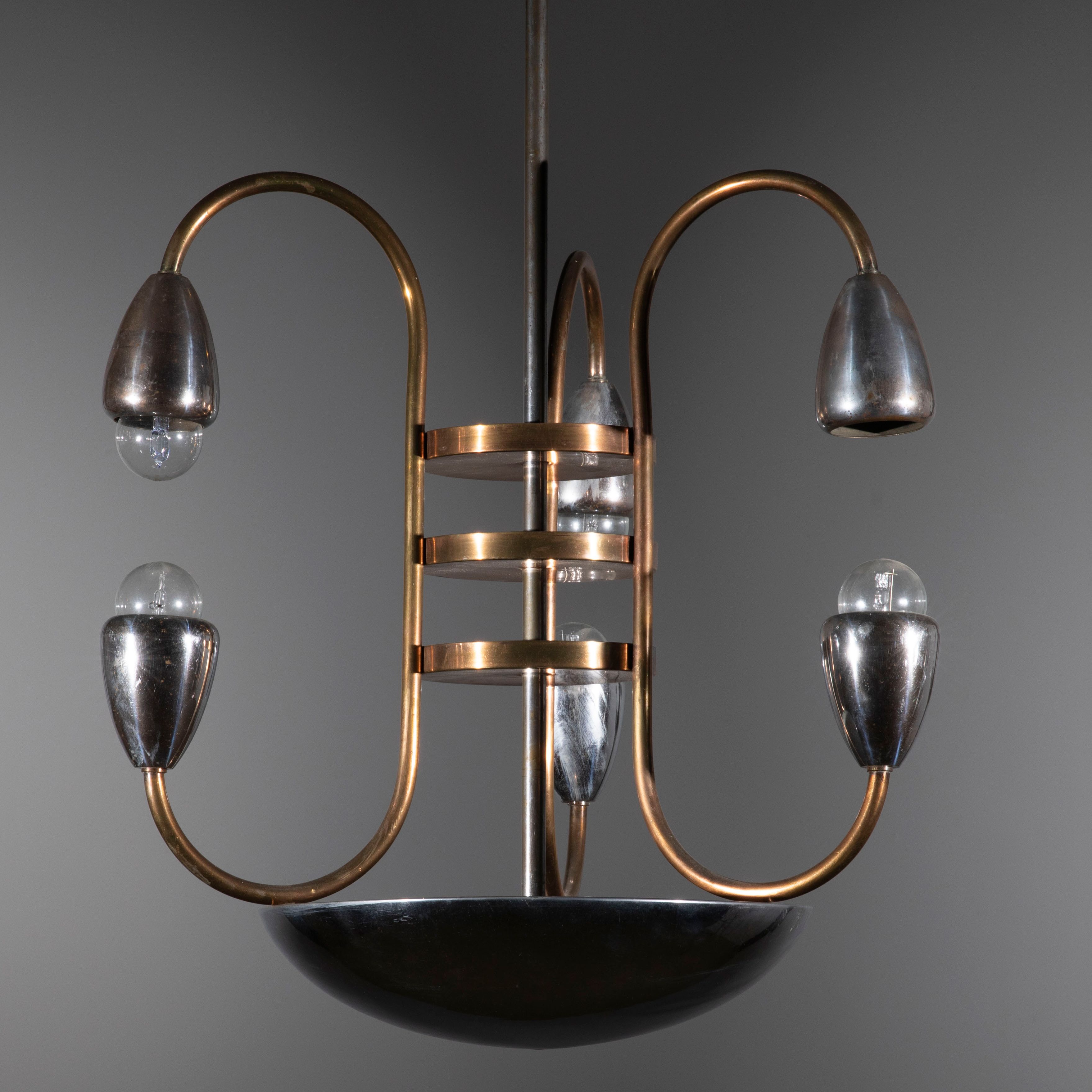
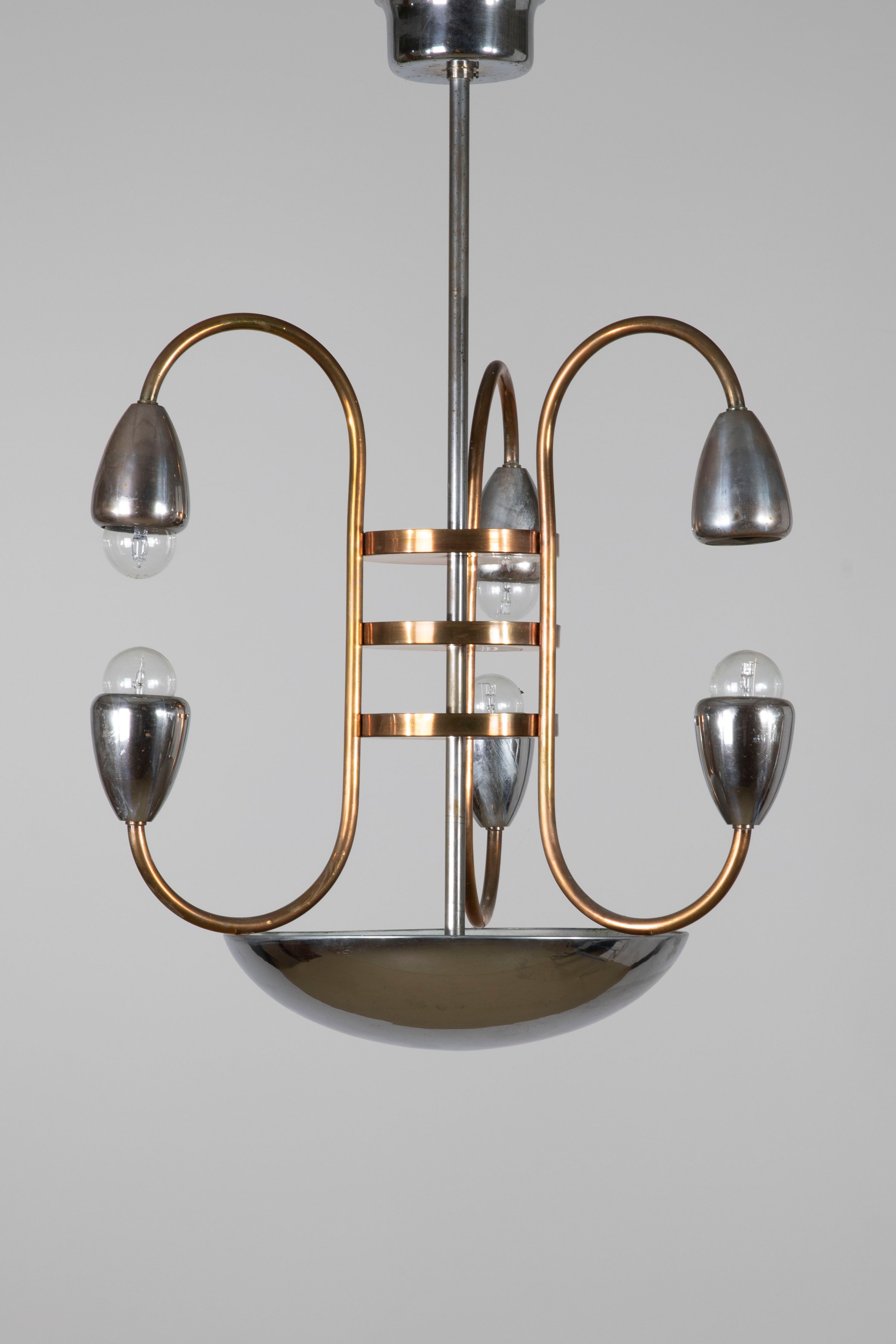
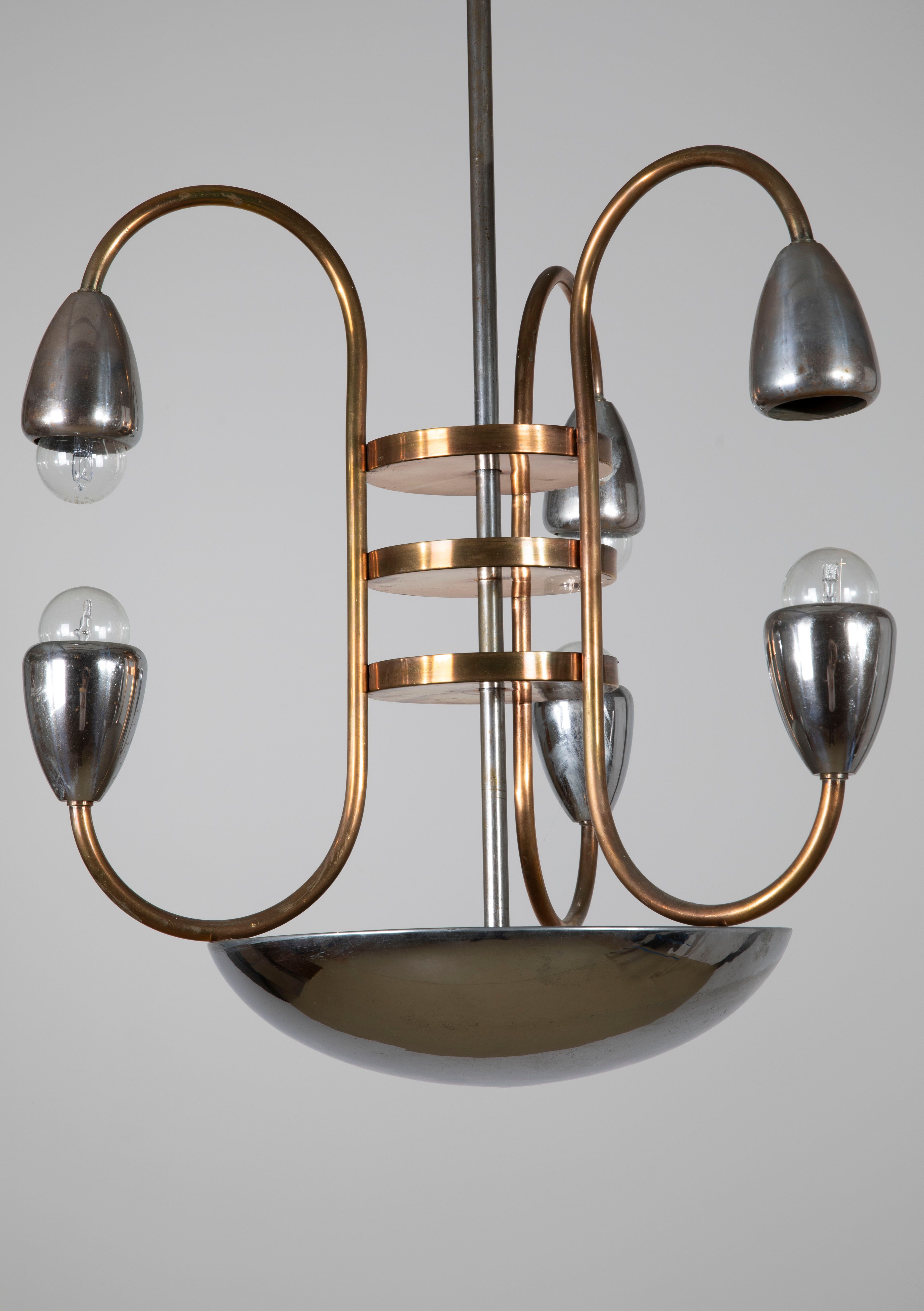
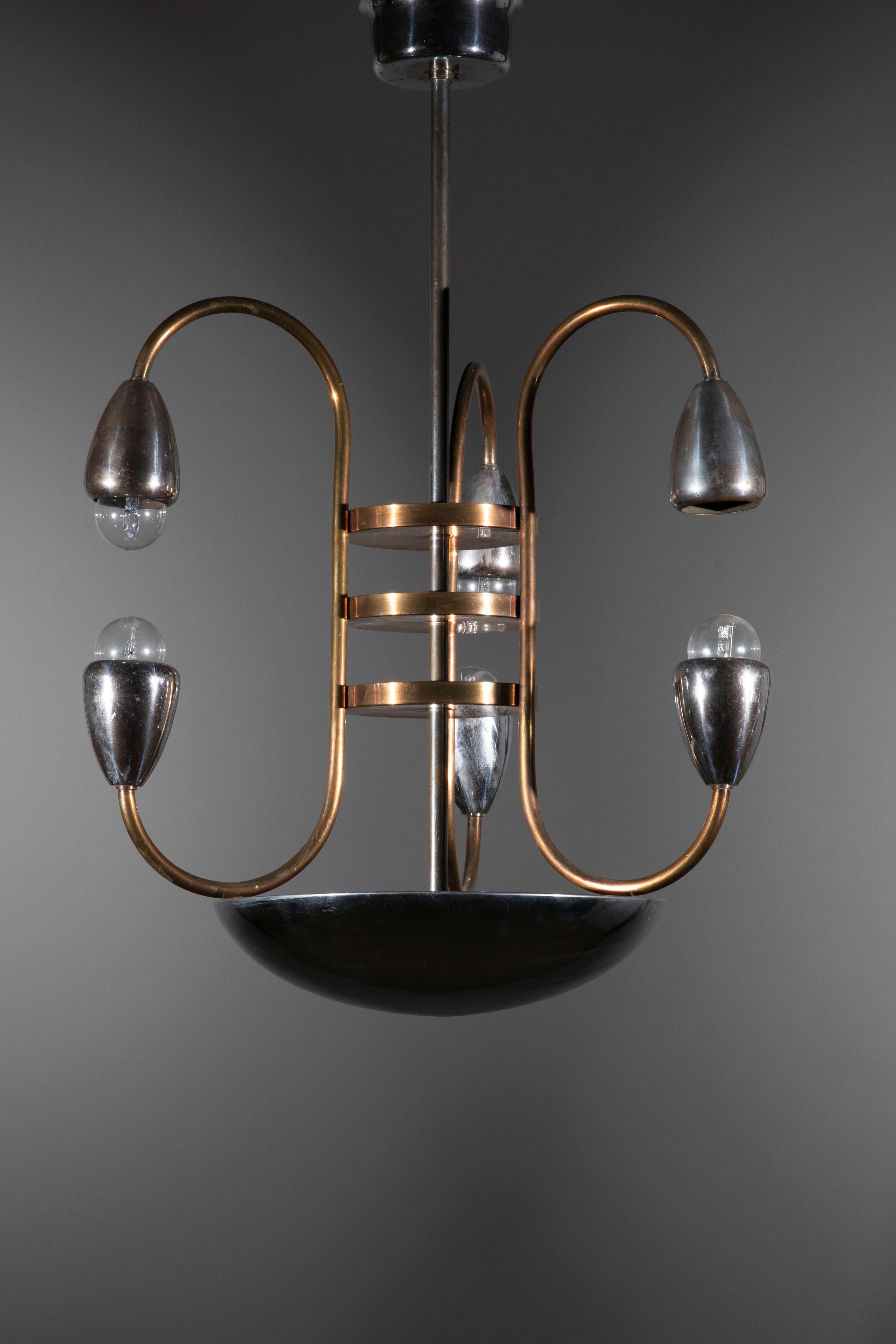
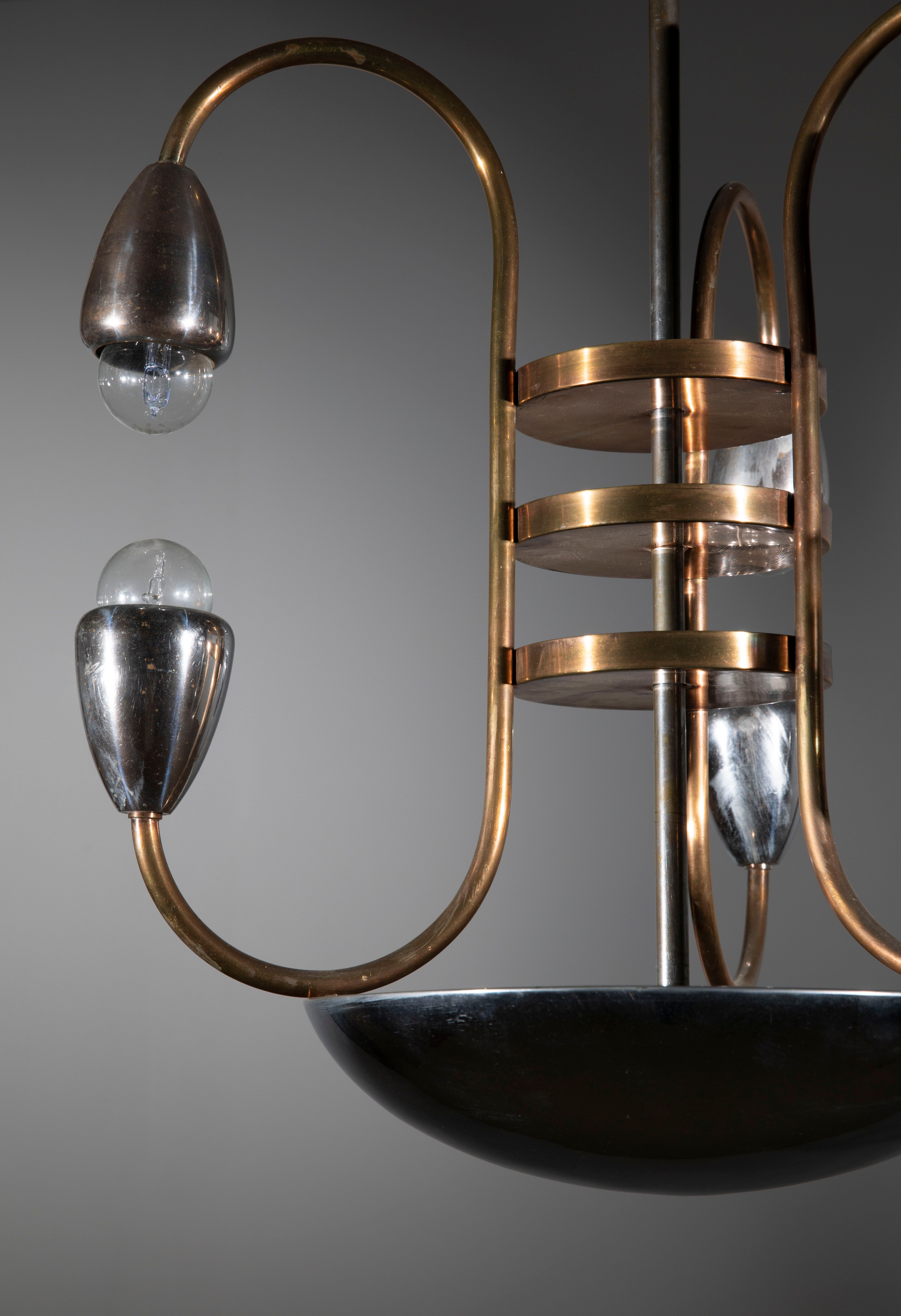
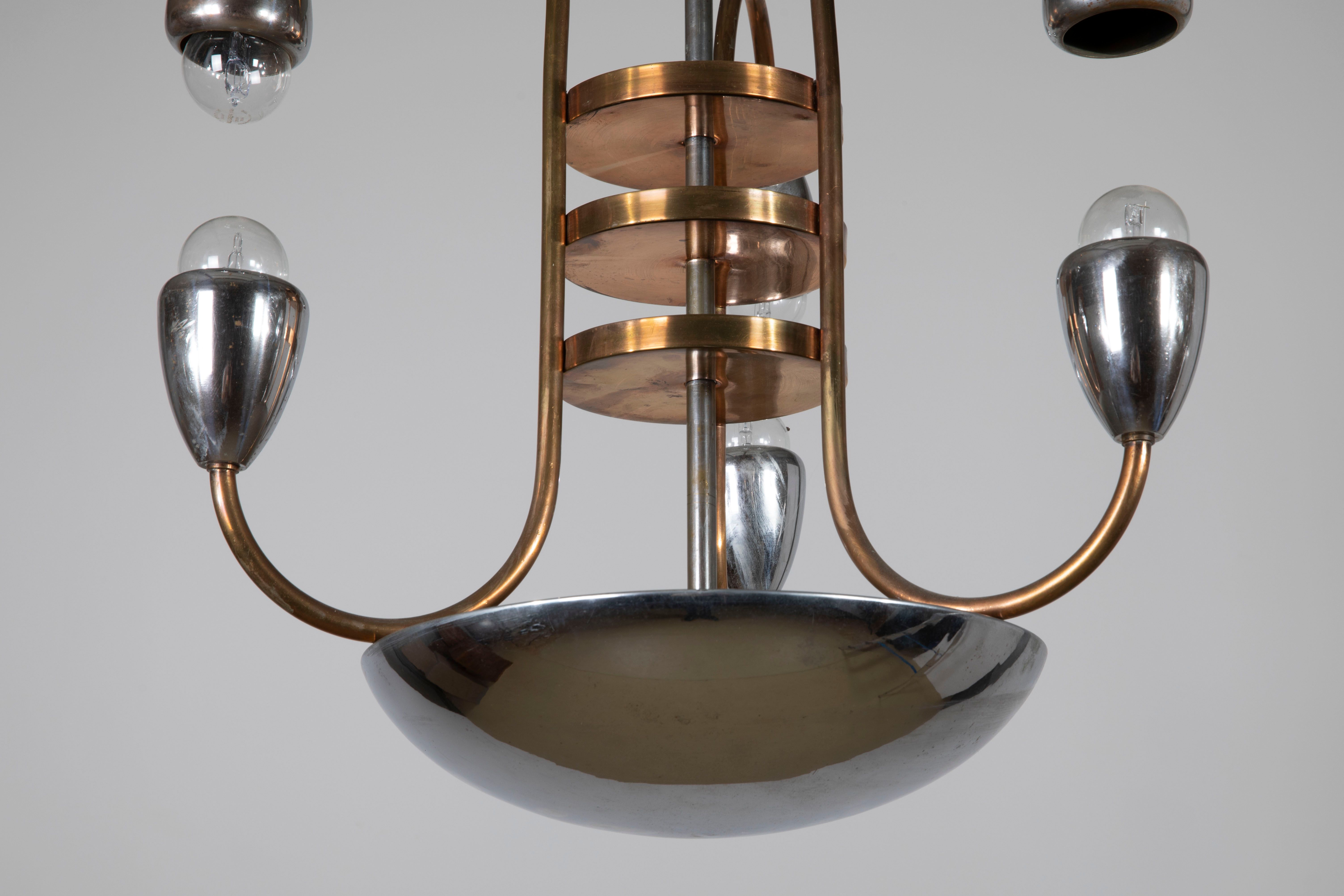
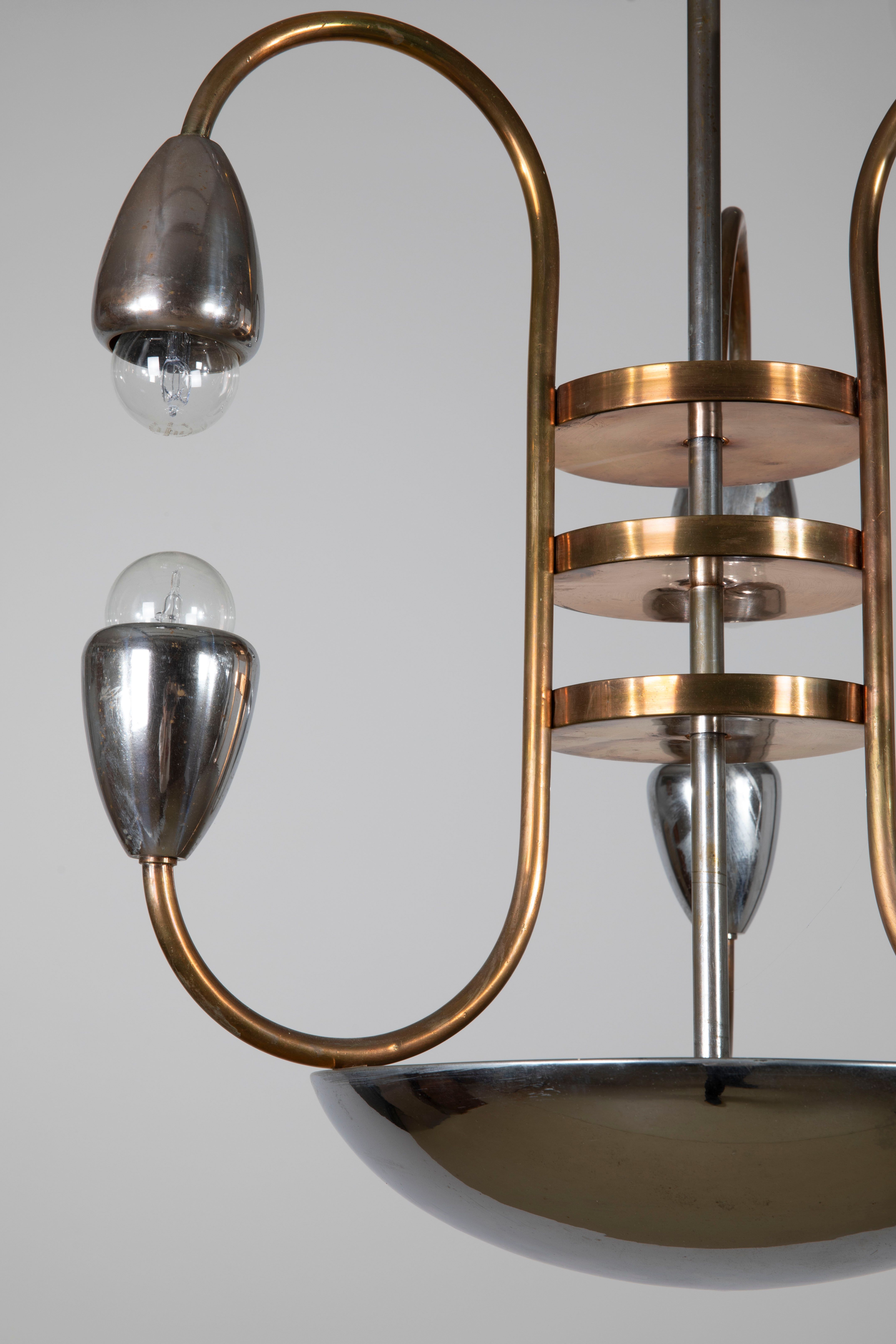
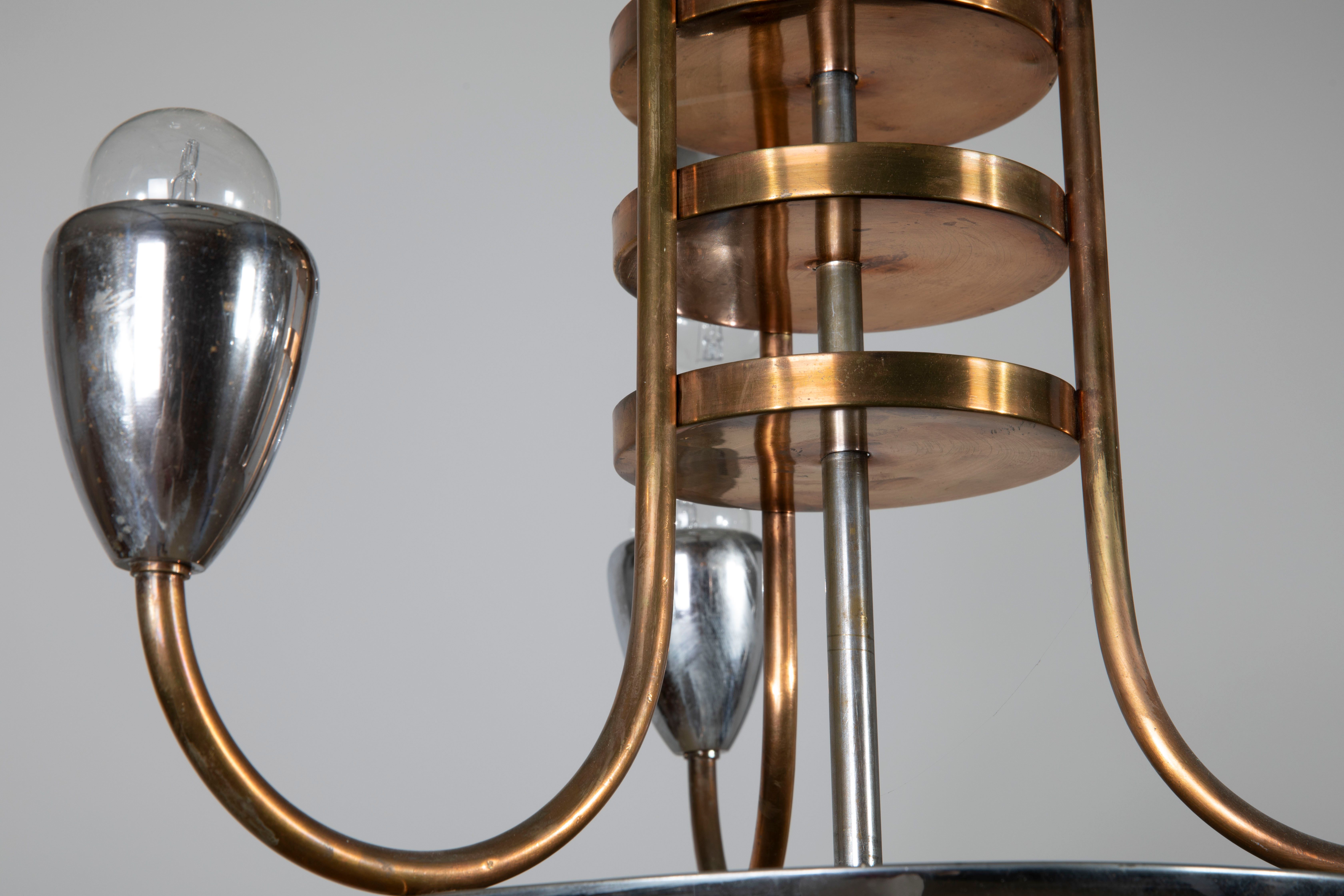
An extraordinary and highly enigmatic 6-light modernist chandelier, dating to the 1930s. This fixture represents a pinnacle of pre-war avant-garde lighting, showcasing a radical functionalist design heavily influenced by the Bauhaus movement and Central European industrial aesthetics. The chandelier's architecture relies on a strict geometric discipline and a sophisticated bi-chromatic metallic contrast. It features six elegant, tubular copper arms bent into an uncompromising, elongated "C" curve. These structural elements are anchored to a central axis defined by three stacked, horizontal copper discs. In striking visual counterpoint, the bulb sockets are shaped as sleek, aerodynamic chrome-plated steel ogives, split evenly to face both upward and downward. The entire configuration terminates in a large, polished chrome hemispherical basin at the bottom, acting as a clean reflective shield. Free from the typical decorative constraints of regional schools, this international-style chandelier focuses purely on the dialogue between the warmth of the copper and the industrial coldness of the polished chrome. Its lineage points directly to the advanced metal workshops of the 1930s European avant-garde, making it a rare and exceptional statement piece for museum-level collections.